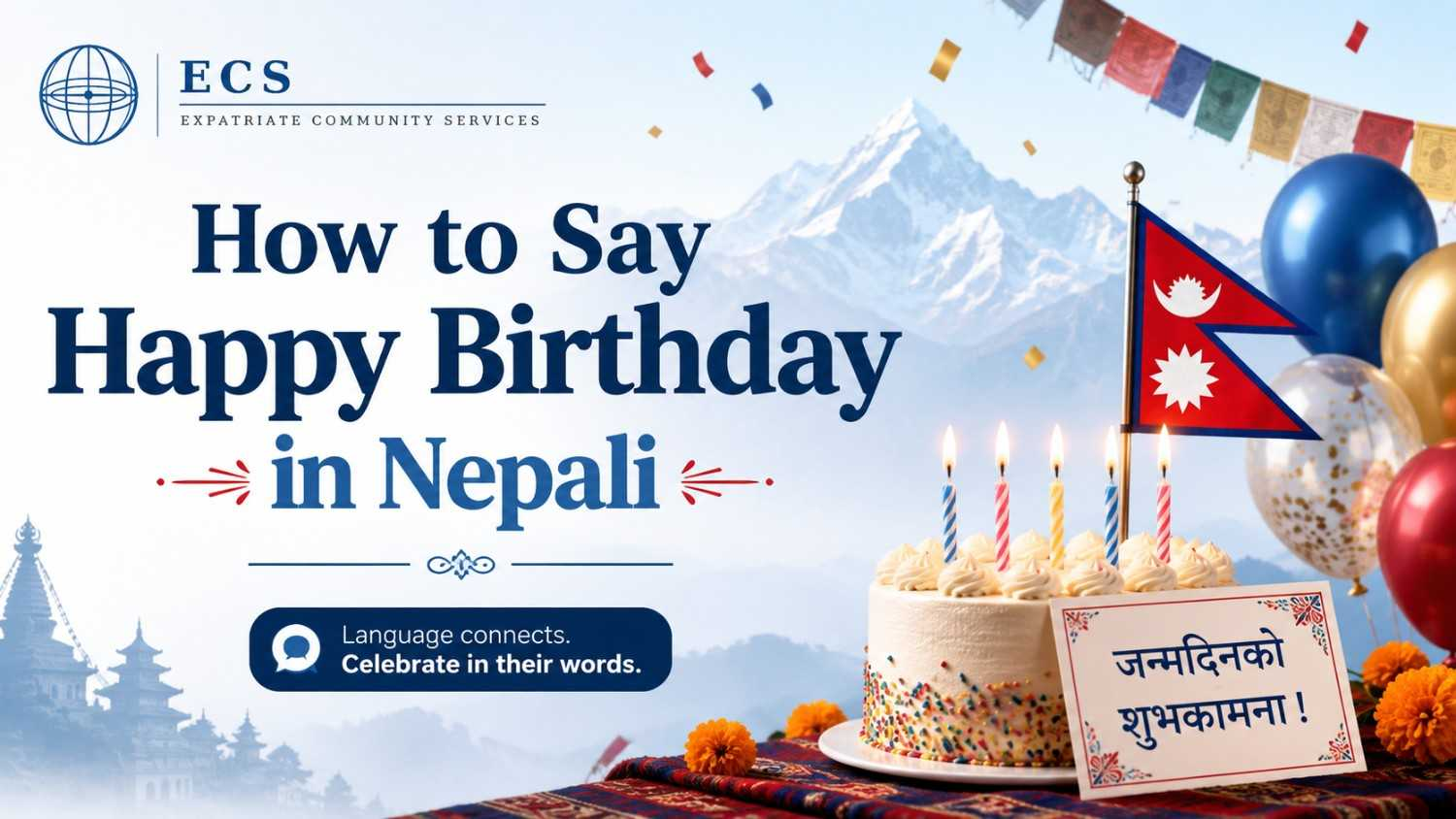
Happy birthday in Nepali is जन्मदिनको शुभकामना (Janmadin ko Shubhakaamana), pronounced JAN-ma-din ko SHOO-bha-kaa-ma-na. For "many happy returns," say धेरै धेरै शुभकामना (Dherai dherai shubhakaamana). In casual settings and WhatsApp messages, most Nepalis under 40 simply write "Happy Birthday!" in English — both are entirely natural.
Janmadin ko Shubhakaamana: The Full Meaning
Break the phrase down and you find genuine warmth in every syllable:
जन्मदिनको शुभकामना
Janmadin ko Shubhakaamana
Pronunciation: JAN-ma-din ko SHOO-bha-kaa-ma-na
Janmadin (जन्मदिन) = birthday. Janma = birth; din = day. Shubhakaamana (शुभकामना) = good wishes or blessings. Shubha = auspicious; kaamana = wish or desire. Together: "Auspicious wishes on your birthday" — more naturally translated as "Happy Birthday," but carrying a warmth the English phrase does not quite contain.
All the Ways to Say Happy Birthday in Nepali
| Phrase | Devanagari | When to Use |
|---|---|---|
| Janmadin ko shubhakaamana | जन्मदिनको शुभकामना | Standard — formal and universal |
| Dherai dherai shubhakaamana | धेरै धेरै शुभकामना | Many many wishes — warm, emphatic |
| Janmadin mubarak hos | जन्मदिन मुबारक होस् | May your birthday be blessed |
Want to learn more Nepali phrases like this?
ECS offers live online Nepali lessons for expats, volunteers, and trekkers worldwide. Our instructors make language feel natural from the very first lesson.
Book a Free Trial Lesson →Key Birthday Vocabulary in Nepali
These seven words will serve you well across any birthday conversation or message:
| Nepali | Devanagari | Meaning |
|---|---|---|
| Janmadin | जन्मदिन | Birthday |
| Shubhakaamana | शुभकामना | Wishes / Blessings |
| Upahaar | उपहार | Gift / Present |
| Khushi | खुशी | Happiness / Joy |
| Umera | उमेर | Age |
| Janma | जन्म | Birth |
| Aayu | आयु | Lifespan / Years of life |
Pronunciation Guide: Janmadin ko Shubhakaamana
This phrase has more syllables than most birthday phrases in other languages — but it breaks down cleanly once you see the parts:
Jan-ma-din: three even syllables — jan (like "John"), ma (neutral), din (like "dean")
ko: short possessive particle — like "co" in "company"
Shub-ha-kaa-ma-na: five syllables — shub (breathy b), ha (open a), kaa (long vowel), ma (neutral), na (soft)
Full phrase at speed: JAN-ma-din ko SHOO-bha-kaa-ma-na
The most common mistake English speakers make is rushing the shubhakaamana and squashing the long kaa vowel. Keep it open and unhurried — the word itself carries a ceremonial quality that rewards slowing down.
Nepali Birthday Traditions: What to Expect
Nepali birthday celebrations blend Hindu ritual, family warmth, and — in cities — familiar modern touches. Here is what you are likely to encounter:
The Tika Blessing
In Hindu tradition, elders place a tika — a mark made from red powder, yoghurt, and rice — on the birthday person's forehead as a blessing for long life and good health. A garland of marigolds may be added, along with a gift of money and spoken blessings. This carries more emotional and cultural weight than any cake or party.
The Masu-Bhaat Feast
In many families, especially outside urban areas, a birthday is marked by a special meal rather than a party. Dal bhat with extra dishes — meat (masu), sweets, favourite foods — is both the celebration and the expression of love.
Cash is a Deeply Appropriate Gift
Gifting money — placed in an envelope or folded in cloth — is entirely normal and welcome in Nepal, particularly for children. It is not considered impersonal; it is practical and caring. A handwritten janmadin ko shubhakaamana note inside makes it personal.
Puja and Temple Visits
For significant birthdays — a child's first birthday, milestone decades, or the pasni (first solid food ceremony) — a religious ceremony may be conducted. Birthdays in traditional contexts are treated as auspicious occasions for receiving divine blessings, not just social celebrations.
The First Birthday is Sacred
The pasni ceremony — a child's first rice-feeding, typically at around five to six months — is one of the most important family events in Nepali culture. If invited to a Nepali child's first birthday, you are being included in something genuinely sacred to the family.
If you attend a Nepali birthday celebration, receiving a tika from an elder is a mark of respect and inclusion. Accept it with both hands slightly raised and a small bow. Saying dhanyabad (thank you) afterwards is always appreciated.
Birthday in Nepali: Frequently Asked Questions
How do you say happy birthday in Nepali?
Janmadin ko shubhakaamana (जन्मदिनको शुभकामना). Casual version: janmadin mubarak hos.
How do you say many happy returns in Nepali?
Dherai dherai shubhakaamana (धेरै धेरै शुभकामना) — 'many many wishes.'
What does janmadin mean?
Janmadin (जन्मदिन) means birthday. Janma = birth; din = day.
What is the Nepali birthday song?
Janmadin mubarak hos — sung to the same melody as the English 'Happy Birthday to You.'
How do Nepali people celebrate birthdays?
Traditions vary. Urban celebrations often include cake and singing. Traditional and religious celebrations may include a tika blessing from elders, a family feast, and a temple visit or puja ceremony. Cash gifts are common and appropriate across both contexts.